Why raw honey tastes different.
Most honey on grocery store shelves is a commodity. It is blended from thousands of hives across multiple countries, heated to high temperatures, and ultra-filtered to remove pollen. The result is a uniform, indefinitely liquid syrup that tastes like "sweet" and nothing else. We do the exact opposite.
The Commodity Process
- 1. BlendingHoneys from different regions and floral sources are mixed in massive vats to achieve a uniform color and flavor profile.
- 2. PasteurizationThe blend is heated to 160°F or higher. This destroys beneficial enzymes and volatile flavor compounds, but prevents crystallization.
- 3. Ultra-FiltrationThe heated honey is forced through micro-filters, removing all pollen, propolis, and beeswax. This makes the origin untraceable.
The Red Dirt Process
- 1. Single-Site ExtractionWe extract honey one apiary at a time. We never blend our Blackjack Oak harvest with our Sandstone Prairie harvest.
- 2. Cold ProcessingWe never heat our honey above 95°F (the natural temperature of a beehive in summer). Enzymes and flavor profiles remain intact.
- 3. Coarse StrainingWe use a simple gravity strainer to remove stray wax and bee parts. The pollen remains, tying the honey to its specific terroir.
Decoding the Label
We treat our honey as a documented agricultural specimen. Every jar we sell includes six specific data points that tell you exactly what you are eating, where it came from, and when it was harvested.
The Science of Crystallization
All raw, unheated honey will eventually crystallize. It is not "going bad" or turning into sugar. It is simply returning to its natural state.
Honey is a super-saturated solution of two main sugars: glucose and fructose. Glucose is less soluble in water than fructose. Therefore, honeys with a higher glucose-to-fructose ratio (like our Sumac Creek) will crystallize rapidly, sometimes within weeks of extraction. Honeys with a higher fructose ratio (like our Blackjack Oak) may remain liquid for over a year.
How to Decrystallize
Place the glass jar in a pot of warm water (around 100°F - 110°F). Do not use boiling water, and never microwave raw honey, as high heat will destroy the beneficial enzymes and alter the flavor profile. Stir occasionally until the crystals dissolve.
Seasonal Bloom Sources
Creek County, Oklahoma (April — October)
Spring (Apr - May)
- Blackjack Oak
- Post Oak
- Wild Plum
- Eastern Redbud
- Dandelion
Summer (Jun - Aug)
- Smooth Sumac
- Purple Coneflower
- Butterfly Milkweed
- White Sweet Clover
- Indian Blanket
Fall (Sep - Oct)
- Goldenrod
- Aster
- Snow-on-the-Mountain
- Smartweed
Frequently Asked Questions
Do you use pesticides?
We do not use synthetic pesticides or herbicides on our land. To manage Varroa mites within the hives, we use organic treatments like oxalic acid (a compound naturally found in spinach and rhubarb) only when necessary, and never during a honey flow.
Can I pick up my order at the farm?
We are a working agricultural facility and do not have a public storefront. However, you can select "Farmers Market Pickup" at checkout to retrieve your order at our booth in Bristow on Saturday mornings.
Is raw honey safe for baking?
Yes, but baking will heat the honey past 160°F, which destroys the raw enzymes and delicate floral notes. We recommend using our honey as a finishing glaze or raw ingredient to fully appreciate its profile.
Why does my honey look cloudy?
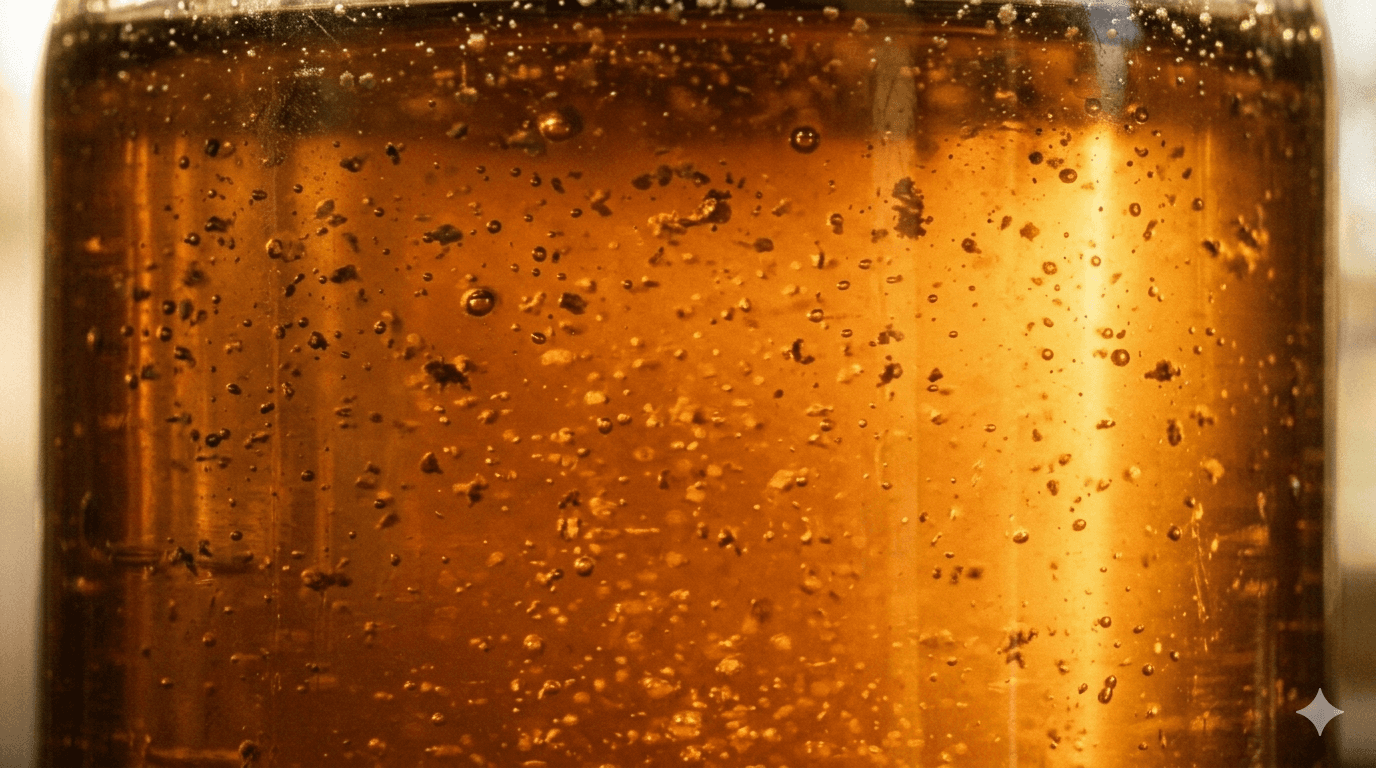
That cloudiness is a combination of suspended pollen grains, micro-bubbles of air from the extraction process, and the beginning stages of crystallization. It is the hallmark of truly raw, unfiltered honey.