Two sisters, 217 hives, and a lot of mistakes.
We didn't inherit a commercial beekeeping operation. We started with two nucs in a backyard and a stubborn belief that honey shouldn't taste like generic syrup.
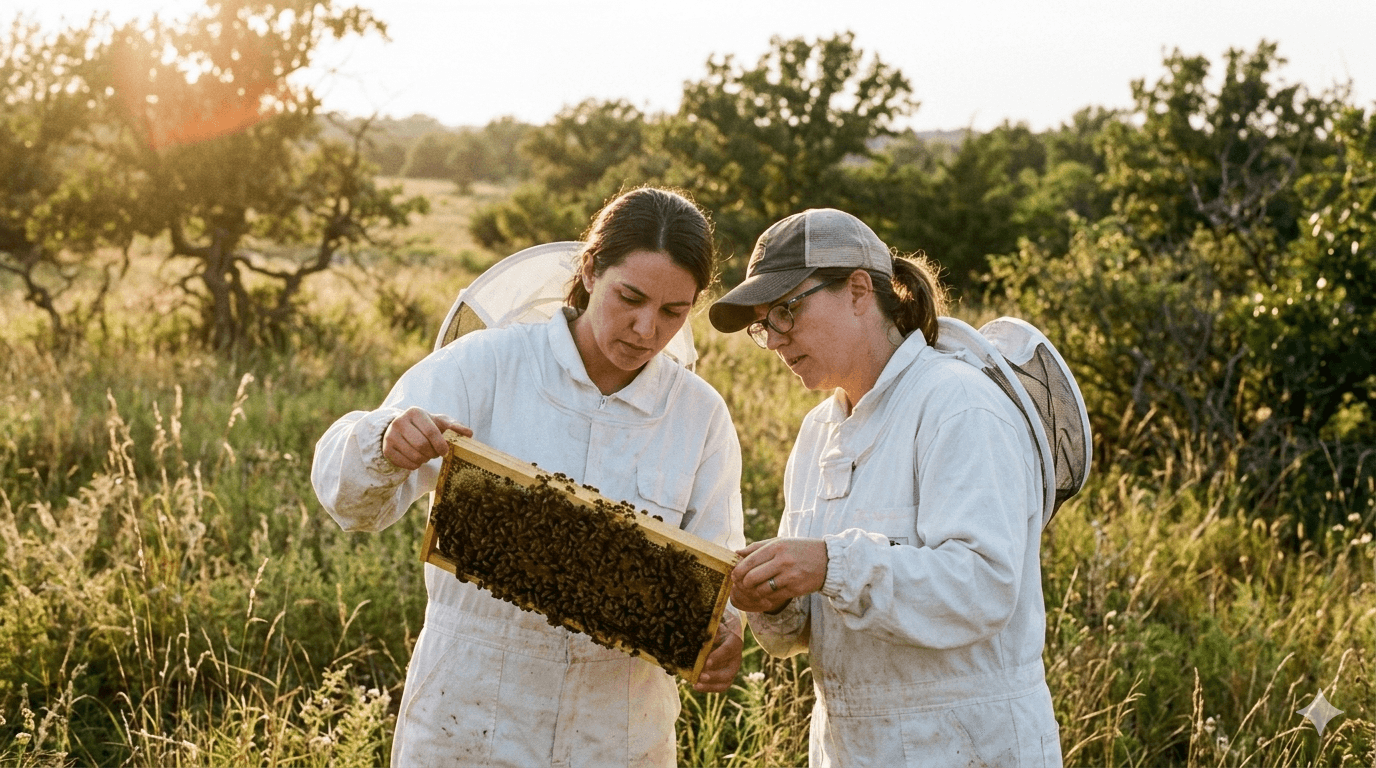
The Vásquez Sisters
Nora spent a decade working in agricultural extension, helping farmers manage soil health and crop rotation. Claire was a food scientist obsessed with fermentation and flavor profiles. In 2019, they combined their neuroses.
"We realized that honey was being treated like a commodity rather than an agricultural product with terroir," says Claire. "You can buy a bottle of wine and know the exact hillside the grapes grew on, but honey is just labeled 'Grade A Sweet'."
Red Dirt Apiary was built to fix that. We manage our hives specifically to isolate nectar flows, allowing us to bottle single-origin honeys that reflect the exact time and place they were made.
Our Three Locations
Creek County Microclimates

01. Cross Timbers
A rugged ridge of sandstone and dense oak forest. The soil is thin, but the deep-rooted Blackjack and Post Oaks provide a reliable, robust nectar flow even during dry Oklahoma summers.

02. Sandstone Prairie
A restored tallgrass prairie featuring a diverse array of native wildflowers including coneflower, blazing star, and milkweed. This site produces our most complex, floral, and approachable honey.
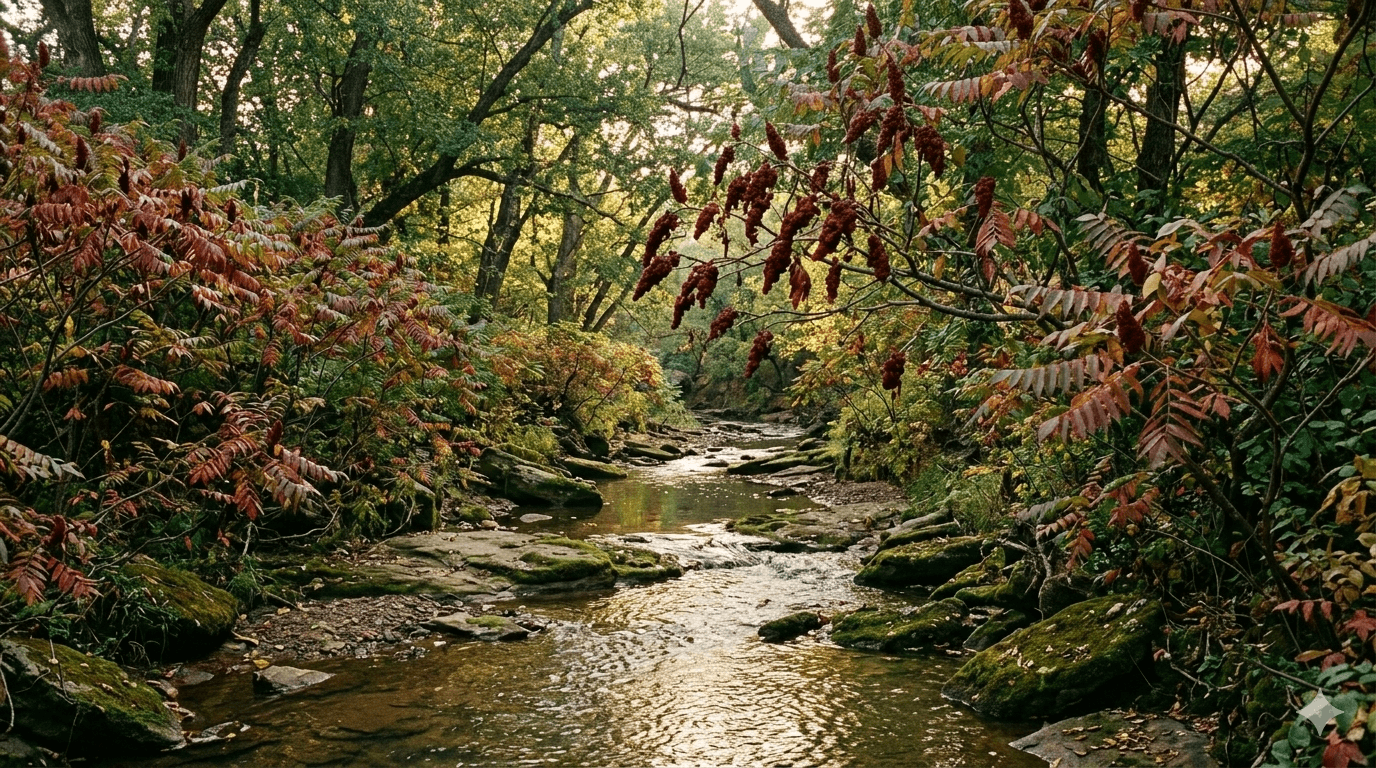
03. Sumac Creek
Tucked away in a creek bottom surrounded by dense stands of smooth sumac. The microclimate here is humid and sheltered, creating a highly concentrated, tangy nectar flow in the early fall.
Hive Philosophy
We run standard 10-frame Langstroth hives. We do not use synthetic chemicals. We manage Varroa mites using organic oxalic acid vapor, and we always leave enough honey on the hives for the bees to overwinter successfully.
There are no shortcuts in beekeeping. If you take too much, the colony dies. If you treat with harsh chemicals, it ends up in the wax. We prioritize the health of the superorganism over maximum yield.
The Extraction Room
Our extraction process is entirely cold. We uncap the frames by hand using a cold knife, spin them in a centrifugal extractor, and let gravity pull the honey through a coarse stainless steel sieve.
We never use pumps, heat exchangers, or micro-filters. It takes longer, it's messier, and it requires more physical labor, but it is the only way to preserve the volatile aromatics that make our honey special.
Taste the Current Harvest
Our inventory is dictated entirely by the seasons and the bees. Shop the current available varietals before they are gone.